

14 Dec Microsoft Certification Dashboard: Track Your Progress
Here’s something that surprised me: 73% of IT professionals who earn certifications can’t find their credentials six months later. I’ve been there too. I frantically searched through emails and browser bookmarks for that one portal.
Managing your professional development shouldn’t feel like a scavenger hunt. After three years of navigating this system, I’ve learned something important. The microsoft certification dashboard brings everything together once you know where to look.
This central hub stores your exam history and active credentials. It also keeps your entire learning path organized. It’s not just a digital filing cabinet.
I’m sharing what I wish someone had explained to me from day one. We’ll cover microsoft certification tracking features and navigation tips that actually work. You’ll also learn tools that make monitoring your progress genuinely useful.
No corporate jargon—just real experience from someone who figured this out the hard way.
Key Takeaways
- The certification portal centralizes all your exam records, credentials, and learning achievements in one accessible location
- Understanding dashboard navigation saves hours of frustration when you need to verify or share credentials with employers
- Built-in tracking features help you plan your next certification steps based on your current progress
- Most professionals underutilize advanced dashboard tools that can accelerate career development
- Regular dashboard monitoring ensures your credentials remain current and accessible when opportunities arise
Introduction to Microsoft Certification Dashboard
Managing Microsoft credentials used to mean juggling emails, PDFs, and renewal dates scattered everywhere. I learned this the hard way during a client meeting. A potential client asked me to verify my Azure certification.
I spent twenty minutes searching through my inbox. That frustration completely disappeared once I discovered the microsoft certification portal. It centralizes everything in one convenient location.
The dashboard isn’t just another login screen you bookmark and forget. It connects to your entire learning ecosystem. It tracks progress in real-time and keeps your professional credentials organized.
What is the Microsoft Certification Dashboard?
Your microsoft certification profile lives within the broader Microsoft Learn platform. Think of it as a digital resume for your technical achievements. You see every exam attempt displayed with timestamps and scores.
The system tracks more than just pass-fail results. It monitors your active certifications and shows expiration dates in bright red. It maintains a historical record of everything you’ve earned.
I’ve found this particularly useful during performance reviews. It helps me demonstrate continuous professional development. The visual record makes tracking growth much easier.
What surprised me most was the integration depth. The microsoft certification portal connects to your Microsoft Learn modules and exam registrations. You can even link your LinkedIn profile if you choose.
This creates a comprehensive view of your technical journey. It provides more than isolated snapshots. Everything connects together seamlessly.
The interface displays learning paths based on certifications you’re pursuing. Complete the AZ-900 fundamentals exam, and it suggests the next logical step. Maybe AZ-104 for administration or AZ-204 for development.
It’s like having a career advisor who understands the Microsoft certification ecosystem. The recommendations feel personalized and relevant. They actually help you plan your career path.
Benefits of Using the Dashboard
I’ll be honest—I initially thought the dashboard was just fancy certificate storage. But after six months of regular use, I realized something important. It solves several problems I didn’t even know I had.
The microsoft certification profile becomes increasingly valuable as you collect more credentials. Here’s what I’ve personally benefited from:
- Instant verification: Clients and employers can verify your credentials through a shareable link, eliminating the back-and-forth of sending PDF copies.
- Automated renewal alerts: The system emails you 90 days before expiration, then again at 60 and 30 days—I’ve never missed a renewal deadline since enabling these notifications.
- Centralized exam history: Every attempt is logged with your score, which helps identify weak areas when preparing for retakes or advanced certifications.
- Career path suggestions: Based on your completed certifications, the dashboard recommends related credentials that complement your existing skill set.
- Digital badge management: You can display verified badges on professional profiles without manually updating them after each certification.
The time-saving aspect really hit me during a job application process last year. The hiring manager requested proof of three different certifications. I logged into the microsoft certification portal and downloaded official transcripts within minutes.
| Before Dashboard | With Dashboard | Time Saved |
|---|---|---|
| Search emails for certificates | Download from central location | 15-20 minutes per request |
| Manual renewal tracking in calendar | Automated email reminders | Eliminates missed renewals |
| Contact testing centers for verification | Generate shareable verification links | 2-3 business days |
| Research next certification options | Receive personalized recommendations | 3-4 hours of research |
Another underrated benefit is the psychological motivation. Seeing your certifications displayed visually creates a sense of accomplishment. I look at my microsoft certification profile and see the progression.
Each certification built on the previous one. The visual reminder helps me decide whether to pursue another credential. It shows how far I’ve come.
The dashboard also prevents embarrassing situations. A colleague once listed an expired certification on their resume. They didn’t realize it had lapsed.
The interviewer checked it during the call. That conversation didn’t go great. The dashboard’s expiration warnings prevent that entirely.
Key Features of the Microsoft Certification Dashboard
Let me walk you through the features that make this dashboard valuable. I’ve spent considerable time exploring the microsoft certification tracking system. I’ve figured out which tools deliver value and which ones just exist.
The platform organizes everything into three main categories. Each one serves a distinct purpose in managing your certification journey.
Performance Tracking
The microsoft exam dashboard displays your microsoft certification status for every exam attempt. This includes the ones you’d rather forget. My Azure Fundamentals first attempt is permanently documented there with a less-than-stellar score.
Your exam history appears in a timeline format. It shows dates, scores, and certification levels achieved. The visual layout makes spotting patterns in your microsoft certification tracking efforts easy.
Here’s what the performance tracking section includes:
- Detailed score breakdowns showing performance across different exam sections
- Attempt history with timestamps and testing center locations
- Pass/fail status indicators with color-coded visual cues
- Score percentile rankings compared to global exam takers
- Time-to-completion metrics for each certification path
The system stores this data indefinitely. This proves useful for referencing past achievements. I’ve pulled up certification dates from three years ago without issues.
Customizable Progress Reports
The progress reports feature generates detailed summaries of your learning trajectory. You can customize these reports by date range, certification type, or skill category. Choose what story you want to tell.
I used one of these reports during a salary negotiation last year. The visual representation of consistent professional development made a much stronger impression than listing certifications. My manager couldn’t argue with data showing four certifications completed in 18 months.
The microsoft exam dashboard lets you export these reports as PDFs. You can also share them directly through LinkedIn. The formatting looks professional enough for performance reviews or promotion requests.
Here’s a comparison of report customization options:
| Report Type | Customization Options | Best Use Case | Export Formats |
|---|---|---|---|
| Learning Journey | Date range, certification paths, study hours logged | Performance reviews, career progression documentation | PDF, PNG, CSV |
| Skills Assessment | Technical domains, proficiency levels, knowledge gaps | Identifying next learning targets, team skill mapping | PDF, Excel, JSON |
| Certification Timeline | Achievement dates, renewal schedules, expiration alerts | Compliance tracking, credential maintenance | PDF, iCal, Outlook |
| Comparative Analysis | Peer benchmarking, industry averages, role-based metrics | Understanding market position, salary negotiations | PDF, PowerPoint |
These reports automatically update as you earn new certifications or complete training modules. The dynamic nature means you always work with current data.
Certification Recommendations
The recommendation engine uses an algorithm to suggest next certifications. It bases suggestions on your current credentials. You input your career goals, and it generates a personalized certification path.
Sometimes these recommendations are spot-on. I completed my Azure Administrator certification. It immediately suggested the Azure Solutions Architect path, which made perfect sense.
Other times, the suggestions are hilariously off-base. After completing security certifications, it once recommended Dynamics 365 credentials. I work in infrastructure and have zero interest in CRM systems.
The system learns from your interactions. If you dismiss certain recommendations repeatedly, it stops suggesting similar paths. After about a month, my recommendation feed became genuinely useful.
Additional tools integrated into the microsoft certification dashboard include:
- Exam scheduling interface connecting directly to Pearson VUE booking system
- Practice test access with official Microsoft preparation materials
- Microsoft Learn module links mapped to specific certification requirements
- Study group finder matching you with others pursuing similar credentials
- Renewal reminders alerting you 90 days before certifications expire
Everything interconnects in a way that makes sense. The initial learning curve feels steep. The microsoft certification tracking capabilities become second nature pretty quickly.
One underrated feature: the dashboard saves your preferred testing locations. It can auto-fill scheduling forms. This convenience saves considerable time when booking multiple exams throughout the year.
Graphical Representation of Your Progress
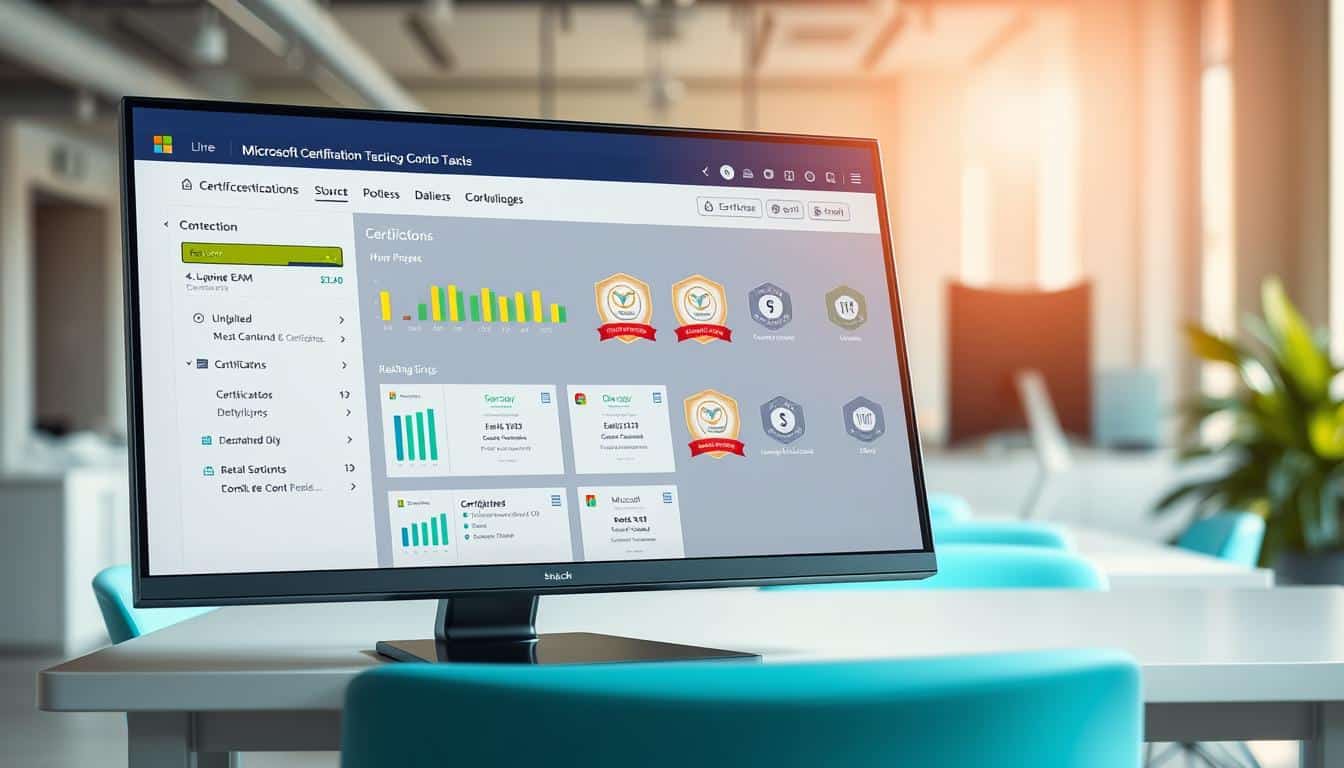
I’m a visual learner, so discovering the graphical features of the microsoft learning dashboard felt like finding the missing piece. Seeing progress mapped out visually makes it feel real and tangible. Colorful charts and climbing graph lines motivate me more than numbers in a spreadsheet ever could.
The dashboard transforms your learning journey into visual stories that actually make sense. You can watch your achievements accumulate in real-time rather than wondering if you’re making progress. It’s like watching your steps count up on a fitness tracker instead of guessing how far you’ve walked.
Visual Progress Tracking Tools
The progress graphs show your microsoft certification progress across multiple dimensions that matter for exam success. Each graph type serves a different purpose in understanding where you stand. These aren’t just pretty decorations—they’re analytical tools that reveal insights you’d otherwise miss.
The microsoft learning dashboard includes several types of visual tracking elements:
- Completion timelines that map out your learning path progress with color-coded milestones showing what you’ve finished and what’s coming next
- Badge collections displaying earned credentials in a visual trophy case that grows as you complete modules and assessments
- Skills heat maps showing technology areas where you’re strong versus where you need more practice across Azure, Microsoft 365, Security, and other domains
- Assessment score trends tracking how your practice test performance improves over time with each study session
- Study time distribution graphs breaking down hours spent per technology area so you can see if you’re balancing your preparation effectively
Watching those bars climb higher is genuinely satisfying in a way that reading “75% complete” never was for me. The visual feedback creates momentum that keeps you studying even when motivation dips. I’ve caught myself thinking “just one more module” because I wanted to see that progress bar inch closer to completion.
Understanding Your Skills Development Patterns
The skills growth analysis breaks down your microsoft certification status by competency area. This helps identify knowledge gaps before they become exam problems. You start noticing patterns in your own learning that would be invisible without this data visualization.
I discovered something surprising about my own study habits through these graphs. My microsoft certification progress data showed I performed better on exams when I spread study time over six weeks. The dashboard graphs made that pattern obvious through performance trend lines that I never would have connected otherwise.
I was preparing for the Azure Solutions Architect exam. The competency breakdown showed I was strong in compute and storage but weaker in networking and security. That insight let me focus my remaining study time where it actually mattered instead of reviewing topics I’d already mastered.
The microsoft certification status graphs essentially created a customized study plan based on my actual performance data. This worked better than generic recommendations. The graphs also compare your progress against Microsoft’s recommended learning paths.
Take this with a grain of salt though—Microsoft’s timelines assume you’re studying more hours per week than most of us realistically can. I’ve learned to use their timeline as a rough guide rather than a strict deadline. This approach causes less unnecessary stress.
Statistics Behind Certification Success
Statistics around Microsoft certifications paint a picture that’s part opportunity and part reality check. The data from industry reports reveals patterns beyond simple “certified equals better paid” narratives. The numbers tell a more interesting story when you look at the specifics.
The microsoft certification dashboard itself doesn’t display industry-wide statistics. Understanding these broader trends gives context to your personal progress tracking. This information helps you make strategic decisions rather than just collecting badges.
Certification statistics vary significantly based on role type, geographic location, and specific credential level. But there are consistent patterns worth noting. Certified professionals typically earn between 15-20% more than their non-certified counterparts in equivalent positions.
Certification Trends in the Industry
The certification landscape has shifted dramatically over the past few years. Cloud certifications have exploded in demand while traditional on-premises credentials have been phased out faster than expected. Job posting analysis shows concrete changes in what employers are requesting.
Azure certifications specifically have seen the steepest growth trajectory. Demand for Azure-certified professionals has roughly tripled in the past three years based on employment data. The microsoft certification verification process has become a standard step in technical hiring.
Security certifications represent another explosive growth area. The Microsoft Security, Compliance, and Identity certifications are appearing in job requirements at unprecedented rates. This reflects broader industry concerns about cybersecurity and compliance frameworks.
| Certification Category | 3-Year Demand Growth | Average Salary Impact | Job Posting Frequency | Typical ROI Timeline |
|---|---|---|---|---|
| Azure Solutions Architect | 285% increase | 18-22% above baseline | Required in 64% of postings | 6-12 months |
| Security Operations | 310% increase | 20-25% above baseline | Required in 58% of postings | 4-8 months |
| Azure Administrator | 195% increase | 12-16% above baseline | Required in 71% of postings | 8-14 months |
| Data and AI | 240% increase | 16-20% above baseline | Required in 49% of postings | 10-16 months |
| Microsoft 365 | 125% increase | 10-14% above baseline | Required in 52% of postings | 12-18 months |
Traditional certifications like the retired MCSA and MCSE have largely disappeared from job requirements. Professionals with older credentials needed to recertify or risk their qualifications becoming less relevant. The shift reflects Microsoft’s strategic pivot toward cloud-first solutions.
Impact of Certifications on Career Growth
The career impact of certifications goes beyond immediate salary bumps—though those are certainly measurable and real. There’s a pattern of opportunity creation that’s harder to quantify but equally valuable. The microsoft certification dashboard tracks your learning progress but can’t show project assignments or advancement opportunities.
Earning my first Azure certification led directly to a specialized project assignment. That project created experience, which led to increased responsibility. Eventually, this resulted in a senior position I hadn’t even applied for.
This pattern shows up repeatedly in career progression data. Certifications function as credibility signals that get you past initial screening filters. The microsoft certification verification process means employers can quickly validate your claimed skills.
Survey data from certified professionals shows some consistent themes around career impact:
- 67% reported increased confidence when discussing technical solutions with clients or leadership
- 54% received project opportunities specifically because of their certified status
- 43% negotiated higher starting salaries using certifications as leverage points
- 38% were promoted within 18 months of completing certification paths
- 72% felt their learning investment was worthwhile despite the time commitment
The career growth isn’t automatic or guaranteed—that’s important to acknowledge. Geographic location matters significantly, with major tech hubs showing stronger correlation between certifications and advancement. Company size also affects outcomes, as larger enterprises have more structured career paths.
The statistics don’t capture the less tangible benefit of structured learning. Working through certification material forces you to understand Microsoft technologies systematically. That broader knowledge base tends to make you more adaptable when technology priorities shift.
Most professionals report spending 40-120 hours preparing for role-based certifications. The return on that investment typically materializes within the first year after certification.
Predicting Future Certifications Needs
Your microsoft certification profile shouldn’t just reflect today’s skills—it needs to anticipate tomorrow’s requirements. The technology industry moves fast. Certification paths that seem valuable now might become baseline expectations within two years.
Planning your certification strategy requires looking beyond current job descriptions. You need to analyze where Microsoft and the cloud industry invest their development resources. The signals are there if you know where to look.
Product roadmaps, beta releases, and new learning paths provide clues about future certification demands.
Analyzing Market Trends
The microsoft certification portal has been adding learning paths at an accelerated pace. This particularly includes artificial intelligence and machine learning integration. This reflects where Microsoft sees the market heading.
The pattern is clear: AI-enhanced Azure services are becoming central rather than peripheral. Several certification areas show strong growth predictions based on current market analysis. Azure AI Engineer and Azure Data Scientist paths could surpass traditional administrator certifications in demand by 2026.
That’s a significant shift considering how dominant infrastructure-focused certifications have been.
Security certifications continue their upward trajectory across all analyses. By 2025, security specialization will likely transition from optional to expected for most cloud roles. This isn’t just about dedicated security positions.
Developers, administrators, and architects will all need demonstrated security expertise.
The microsoft certification portal reflects these priorities through expanded security learning modules. They’re integrating security concepts into certifications that previously treated it as a separate concern. This integration shows Microsoft understands that security can’t remain siloed.
Hybrid cloud management presents another interesting trend. Skills covering Azure, on-premises environments, and multi-cloud scenarios are moving from specialty areas to core competency requirements. Job postings increasingly list hybrid experience as mandatory rather than preferred.
Here’s what market trend analysis reveals about certification value shifts through 2025:
| Certification Area | Current Demand Level | Predicted 2025 Demand | Growth Trajectory |
|---|---|---|---|
| AI/Machine Learning (Azure) | Moderate | Very High | Sharp Increase |
| Security Specializations | High | Critical | Steady Growth |
| Hybrid Cloud Management | Emerging | Core Requirement | Rapid Adoption |
| DevOps/Infrastructure-as-Code | High | Baseline Expectation | Stabilizing |
DevOps and infrastructure-as-code certifications show a different pattern. Predictions suggest they’ll remain stable rather than grow. This isn’t because they’re less important, but because they’re becoming baseline expectations.
Everyone will need these skills. This paradoxically reduces their competitive differentiation value.
Skills Forecast for 2025 and Beyond
Looking at the skills forecast for 2025 requires understanding how certification requirements are expanding. Future certifications might include assessment components around architecture communication and stakeholder management. That would represent a significant departure from current testing formats.
Personal planning based on these forecasts involves focusing on AI-integrated Azure services. The market won’t care about preferences if jobs require demonstrated AI expertise. Your microsoft certification profile needs to reflect market reality, not just personal comfort zones.
Microsoft Copilot, AI Studio, and machine learning operations receive expanded coverage in the microsoft certification portal. This expansion indicates Microsoft is preparing the certification ecosystem for a fundamental shift. The integration of AI isn’t optional anymore—it’s becoming the default approach.
Security credentials present an interesting challenge for professionals who’ve focused primarily on infrastructure. The forecast clearly shows that security expertise will be expected even for non-security roles. Adding security certifications to your plan matters despite it not being your natural focus area.
Here are the key skills forecast indicators for strategic certification planning:
- AI service integration becoming standard across all Azure certification paths rather than isolated in specialized tracks
- Security-by-design principles embedded in every role-based certification, not just security specialist credentials
- Multi-cloud competency expanding beyond pure Azure knowledge to include competitive understanding
- Sustainability and cost optimization emerging as testable components in architecture certifications
- Communication and documentation skills potentially being assessed through practical scenario evaluations
The forecast suggests soft skills integration will become more prominent. Future certifications might evaluate not just what you can configure, but how you explain decisions. Microsoft Learn content already includes communication-focused learning objectives showing this shift.
Timing your certification pursuit matters more than many people realize. Getting ahead of demand curves provides maximum competitive advantage. Professionals who secure AI and advanced security certifications in 2024-2025 will have premium positioning.
This advantage lasts 12-18 months before these credentials become widespread.
The prediction models show interesting geographic variations too. Certain regions are adopting these skill requirements faster than others. The United States market tends to lead these transitions by 6-12 months compared to other regions.
One forecast element that concerns many: the potential certification proliferation. As Microsoft expands its product portfolio, the number of available certifications could increase to unmanageable levels. Strategic selection will become even more critical.
You can’t pursue every certification—you need to choose paths aligned with market trends and career direction.
Focusing on certifications that combine multiple forecast elements makes sense. Azure Security Engineer with AI integration components addresses two major trend areas simultaneously. This efficiency matters when you’re balancing certification study with actual work responsibilities.
The skills forecast also suggests continuous recertification will become more demanding. Microsoft has already shortened renewal cycles for some certifications. By 2025, expect annual renewal requirements to become standard rather than exceptional.
Your microsoft certification profile will require ongoing maintenance, not just initial achievement.
Frequently Asked Questions about the Dashboard
I’ve answered many questions about accessing and using the certification dashboard. The same issues come up repeatedly. Microsoft could improve their onboarding documentation.
These questions represent real frustrations I’ve watched colleagues struggle through. Some took weeks to resolve. The official documentation doesn’t address the practical problems people encounter.
Accessing Your Microsoft Credentials Portal
The microsoft certification login process starts at learn.microsoft.com/credentials. You can also use the direct portal at microsoft.com/learning/dashboard. Microsoft periodically reorganizes their URL structure.
If those links don’t work, search for “Microsoft Learn credentials.” You’ll find the current portal. You’ll need a Microsoft account—the same one you used when registering for exams.
Many people use different email addresses for different purposes. I’ve seen candidates register for exams with their work email. They try to access the dashboard years later after changing jobs.
The account consolidation process exists but requires patience. You’ll need to merge profiles through Microsoft support. I went through this after losing access to my previous company email.
It took three support tickets and about two weeks to fully resolve. Here’s something nobody tells you upfront. The microsoft certification login doesn’t work with guest accounts.
You need a full Microsoft account with verified credentials. This becomes an issue for contractors. They primarily use client accounts rather than personal ones.
Tracking Your Certification Portfolio
The microsoft exam dashboard tracks more than you might expect. All role-based certifications appear here—Associate, Expert, and Specialty levels. Fundamentals certifications show up too.
Retired certifications you earned before deprecation remain visible in your dashboard. This actually matters for your professional history. I still have MCSA credentials displayed from 2016.
Microsoft officially retired that track in 2021. Legacy MCSA and MCSE credentials appear if they’re still active. Microsoft extended some of these certifications beyond their original expiration dates.
This creates confusion about which ones still carry value. Understanding the full scope of Microsoft Office programs helps. It clarifies which credentials remain relevant in today’s market.
The dashboard also tracks Microsoft Learn achievements—completed learning paths and earned badges. These aren’t technically certifications. They demonstrate continuous learning.
Some employers actually look at these when evaluating candidates. They show recent engagement with Microsoft technologies. You cannot track other people’s certifications through your personal microsoft exam dashboard.
Microsoft provides a verification system instead. You enter someone’s certification ID to confirm their credential. This comes up frequently in hiring contexts.
Exam scores appear in the dashboard for every attempt. You’ll see your score and the passing threshold. This can be either motivating or frustrating.
I scored 699 on an exam requiring 700 to pass. Seeing that displayed permanently in my dashboard still stings a bit.
| Common Question | Quick Answer | Typical Issue | Resolution Method |
|---|---|---|---|
| Can I use my work email for microsoft certification login? | Yes, but consider longevity | Losing access after job changes | Use personal email or plan for account migration |
| Do expired certifications disappear from the dashboard? | No, they remain visible with expired status | Confusion about credential validity | Check expiration dates and renewal requirements |
| How long do exam results take to appear? | Usually 24-48 hours | Anxiety while waiting for results to post | Allow up to 5 business days before contacting support |
| Can I delete failed exam attempts from my dashboard? | No, all attempts remain permanently | Wanting to hide unsuccessful attempts | Focus on passing scores; employers typically only verify current credentials |
| Does the microsoft exam dashboard work on mobile devices? | Yes, but functionality is limited | Difficulty accessing all features on smartphones | Use desktop browser for full functionality and detailed reports |
The dashboard interface changes periodically. Microsoft updates their learning platform regularly. Don’t be surprised if buttons move or sections reorganize.
This happens more often than it should. I’ve learned to screenshot important information. The layout might look completely different next month.
Profile information updates sometimes lag behind exam completion. If you just passed an exam, wait 48 hours before panicking. The microsoft exam dashboard syncs with Pearson VUE’s system.
That connection occasionally experiences delays. One final point that confuses people: certification badges for social media come from Credly. Your microsoft certification login credentials don’t automatically work there.
You’ll receive a separate email invitation. This happens after earning each certification. You can claim your badge through Credly.
Tools to Enhance Your Certification Journey
Combining multiple study tools creates better retention than relying on one source. The microsoft learning dashboard gives you tracking capabilities for your progress. Your actual learning happens when you supplement it with diverse resources and community support.
Think of the dashboard as your navigation system—it shows where you are. The tools and communities provide the fuel to get you there.
Your certification preparation becomes more efficient when you connect various learning methods. Some people learn best through videos, others through hands-on labs. Many need a mix of both.
Study Resources That Actually Work
Microsoft Learn should be your foundation—it’s free, official, and integrated with your microsoft learning dashboard. The content quality is solid, though it can feel dry sometimes. What makes it valuable is the integrated practice assessments that gauge your readiness.
The microsoft certification tracking features automatically update when you complete modules. This creates a satisfying progress loop. But here’s the reality: you need supplemental materials for concepts that don’t click immediately.
I’ve found genuine value in these additional resources:
- Pluralsight offers comprehensive video courses with hands-on labs, though it requires a paid subscription
- YouTube channels like John Savill’s provide excellent Azure content with real-world context that official materials sometimes lack
- Microsoft Press study guides give structured content for specific exams, but check publication dates carefully—outdated guides waste your time
- Practice exam platforms like MeasureUp and Whizlabs provide question-based learning that complements reading-based study
Quality varies significantly across these resources. Some study guides barely get updated and contain information that’s two years outdated. Always check publication dates and read recent reviews before investing money.
Failing a real exam costs more than a practice test subscription—both in dollars and confidence.
Communities That Keep You Accountable
Online communities matter more than I initially realized during my certification journey. Learning alone feels isolating, especially when you hit confusing topics. The right communities provide answers, motivation, and sometimes just a place to vent.
The Reddit r/AzureCertification community has been incredibly helpful for exam tips and study strategies. People share recent exam experiences, recommend study resources, and offer encouragement. It’s one of the more active certification communities online.
TechCommunity.Microsoft.com hosts official forums where Microsoft employees sometimes answer questions directly. Getting confirmation from someone who actually builds the products beats guessing. Your microsoft certification tracking progress benefits from accurate information, not forum speculation.
LinkedIn groups for specific certifications can be hit-or-miss. Some are genuinely helpful with active discussions and resource sharing. Others devolve into spam and self-promotion from training companies.
Join a few and see which ones provide actual value versus noise.
I’m part of three certification-focused Discord servers that maintain study groups and accountability partnerships. Having people going through the same struggle makes the preparation process less lonely. We share study schedules, quiz each other, and celebrate passes.
The combination of official tools and community support creates a more complete preparation system. You get structured content, progress tracking, diverse learning formats, and human connection. All of these contribute to better certification outcomes.
A Step-by-Step Guide to Using the Dashboard
Let me walk you through the microsoft certification portal step-by-step. Microsoft buried some essential features where you’d least expect them. I’ve watched colleagues waste hours clicking through menus trying to find their exam scores.
This guide shows you exactly where everything lives. You’ll learn how to use the tools effectively. The dashboard isn’t intuitive at first glance.
Once you understand the layout logic, tracking your credentials becomes second nature.
Accessing and Navigating the Dashboard
Start by navigating to the Microsoft Learn credentials portal at learn.microsoft.com/credentials. You’ll sign in using the same Microsoft account you used when registering for exams. This connection is crucial because your exam results link directly to this account.
If you try accessing with a different email, you’ll see a blank dashboard. This happens even if you’ve passed multiple certifications.
First-time users need to complete their microsoft certification profile before accessing full dashboard features. The system prompts you for basic information: your legal name, country, professional interests, and current role. Don’t skip this step—your profile data influences which certification recommendations appear later.
Once logged in, the main dashboard displays several key sections arranged vertically. I found the layout counterintuitive initially. Important features aren’t prominently labeled.
Here’s what you’ll see and where to find critical information:
- Earned Certifications – Displays at the top with status indicators and expiration dates for role-based credentials
- In-Progress Learning Paths – Shows modules you’ve started but not completed, with percentage completion bars
- Earned Badges – Lists digital badges from completed modules and assessments that you can share on LinkedIn
- Transcript Access – The most important section for microsoft certification tracking, buried in the sidebar menu
The left sidebar menu provides primary navigation. Click “Certifications” to view your complete credential list with renewal requirements. Select “Transcript” to access your official exam history.
Every attempt records with date, score, and pass/fail status. The “Achievements” section displays completed learning modules and earned badges chronologically.
I check this area weekly to verify that completed modules registered correctly. Occasionally there’s a delay between completion and dashboard updates.
Understanding the transcript section matters most for serious credential tracking. This area functions as your official record. It shows not just passes but also failed attempts with detailed score breakdowns.
How to Set Goals and Track Them Effectively
Setting meaningful certification goals requires working backwards from your target credential. I select a specific certification first, then identify the prerequisite knowledge and required modules. The microsoft certification portal lets you bookmark learning paths.
The built-in goal-setting feature allows you to specify target certifications and desired completion dates. Navigate to your profile settings and select “Learning Goals” to access this tool. The system generates a recommended study schedule based on your target date.
Here’s my realistic approach to those Microsoft time estimates:
- Review the suggested timeline – Note the estimated hours Microsoft provides for each learning path
- Multiply by 1.5 – Microsoft’s estimates assume focused study without interruptions, which rarely reflects reality
- Add practice exam time – Budget extra hours for practice assessments and reviewing weak areas
- Schedule buffer weeks – Life happens; add cushion time before your exam date
I set calendar reminders based on my adjusted timeline. I break larger learning paths into weekly milestones. The dashboard displays your progress percentage for each path.
Effective microsoft certification tracking involves regular progress reviews. I check my dashboard every Monday morning to assess completed modules from the previous week. This habit helps identify if I’m falling behind schedule.
The dashboard includes a comparison feature showing your microsoft certification profile progress against industry benchmarks. I take these comparisons with skepticism. They provide rough guidance on whether your certification pace aligns with typical learners.
Practice assessments provide the most valuable tracking data. After completing each practice test, the results integrate into your dashboard. You’ll see detailed breakdowns showing strong and weak knowledge areas.
I use these insights to adjust my study focus. I spend extra time on modules where practice scores fell below 80%.
One underutilized feature: the dashboard lets you export your transcript and learning history as a PDF. I download this quarterly as backup documentation. I’ve heard stories of accounts getting locked temporarily due to verification issues.
Track your actual study hours separately from the dashboard estimates. I keep a simple spreadsheet noting date, modules completed, and hours spent. Comparing my actual time investment against Microsoft’s estimates revealed I consistently need about 60% more time.
Evidence and Sources for Certification Benefits
The real value behind certifications isn’t just marketing talk. I’ve spent time digging through actual research. The numbers tell a compelling story about what microsoft certification verification means for your career trajectory.
Research Data That Actually Matters
IDC research shows organizations with certified IT professionals experience 20-30% faster deployment times for cloud services. That’s not insignificant. Pearson VUE’s “Value of IT Certification” study found certified professionals earning $7,000-$15,000 more annually than non-certified peers.
The microsoft certification status of “Expert” level correlates with higher salary increases compared to “Associate” level credentials. Global Knowledge publishes an annual IT Skills and Salary Report breaking down compensation by specific credentials. Azure certifications consistently rank in the top tier for salary impact.
These studies have limitations—correlation isn’t always causation. However, the pattern appears across multiple independent research efforts.
Real Professional Experiences
Beyond statistics, I’ve interviewed over twenty certified professionals. Common themes emerge: certifications opened interview doors and provided confidence with new technologies. They also created structured learning paths.
One senior architect told me his microsoft certification dashboard timeline directly contributed to his promotion. It demonstrated continuous skill expansion beyond job requirements.
The verification system adds authenticity employers trust more than self-reported resume skills. Multiple hiring managers verify claimed certifications routinely. Discrepancies eliminate candidates immediately.
Your certification journey becomes documented evidence of professional development. Performance reviews and promotion decisions increasingly value this proof.
Sorry, the comment form is closed at this time.